[17 Jun 2010 | One Comment | ]
The Siege of Ascalon

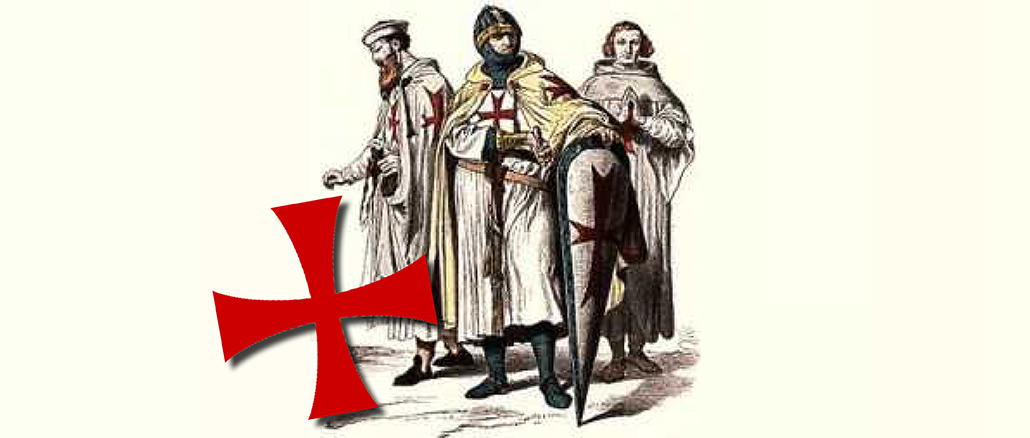
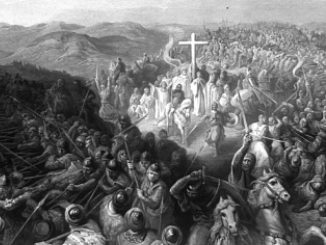
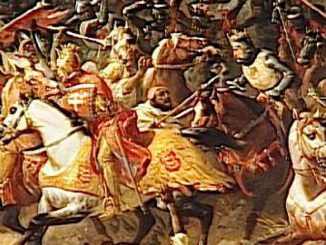
On 25 January 1153 the Commander of the City of Jerusalem, along with the ten knights under his command, was guarding the True Cross as an army of Templars, Hospitallers, seculars and ecclesiastics made the march toward Ascalon. The massive army arrived at the walls of the port city with as many siege towers as King Baldwin could gather for the war that lay ahead.

Ascalon was situated on the Mediterranean coast and its fortifications were like a half circle; the radius on the shoreline and the semicircle on the landside facing eastward. William of Tyre described the city as being like a basin, that sloped seaward, girded round with artificial mounds, on which were built walls, studded with towers. The stone work, according to William’s account was held together with cement, which made them very strong. There were also four gates in the circuit of the city’s walls and one wall was flanked by two high towers.

Read the full story »

Featured, Templar Miscellania »

[17 Jun 2010 | No Comment | ]
The First Templar (Trailer)

Those who are fans of Assassins Creed will get the opportunity to battle on the other side of the field. Kalypso Media is looking to release their new game early in 2011 for PC and Xbox 360. They’ve recently released the trailer for The First Templar.

Headline, Templar History »

[17 Jun 2010 | One Comment | ]
The Siege of Ascalon

On 25 January 1153 the Commander of the City of Jerusalem, along with the ten knights under his command, was guarding the True Cross as an army of Templars, Hospitallers, seculars and ecclesiastics made the march toward Ascalon. The massive army arrived at the walls of the port city with as many siege towers as King Baldwin could gather for the war that lay ahead.

Ascalon was situated on the Mediterranean coast and its fortifications were like a half circle; the radius on the shoreline and the semicircle on the landside facing eastward. William of Tyre described the city as being like a basin, that sloped seaward, girded round with artificial mounds, on which were built walls, studded with towers. The stone work, according to William’s account was held together with cement, which made them very strong. There were also four gates in the circuit of the city’s walls and one wall was flanked by two high towers.

Featured, Templar Miscellania »

[15 Jun 2010 | No Comment | ]
To catch a Tudor by smallGRAND

Our friends at smallGRAND have released another of their comedic videos. This one has Henry VIII being caught in a sting operation by Dateline’s Chris Hansen, who examines renaissance sexual mores.

Featured, Modern Templars »

[11 Jun 2010 | 3 Comments | ]
Chivalry for Children Program

“Chivalry is dead.” I’ve heard that a thousand times. I’ve said it myself. You’ve probably said it, too. But thinking about it, I’ve realized that what people generally mean is “Courtesy isn’t what it used to be.” That’s a statement I can agree with. But then I still read Emily Post’s “Blue Book”, wear hats, and know enough to take them off in elevators and in the presence of ladies (defined as any woman at least 14 years old who haven’t proven that they are not ladies). In any event, that is a discussion for another time.

Chivalry is not dead. It is my contention that wherever an individual is willing to put their life, their fortune or their sacred honor on the line for someone else, Chivalry lives.

Featured, Templar Miscellania »

[10 Jun 2010 | No Comment | ]
BOOM Studios releases Hawks of Outremer

Robert E. Howard’s lesser-known character with a sword, Cormac Fitzgeoffrey, is in comic book stores this week, the lead hand in BOOM Studios adaptation of Howard’s 1931 short story Hawks of Outremer.

Hawks is set during the Third Crusade and brings Cormac to Outremer where the battle-loving Irish chief soon meets King Richard for a little less-than-PC skull smashing action in all its unapologetic glory.

Featured, Reviews & Interviews »

[9 Jun 2010 | No Comment | ]
The Invisible History of the Rosicrucians

The Invisible History of the Rosicrucians is author Tobias Churton’s ambitious attempt to create the definitive book on a complex and oft-misunderstood subject. Churton, perhaps best known for his works on Gnostic writings and philosophy, is a lecturer at the Exeter University (UK) master’s program in Western Esotericism and is considered one of the world’s foremost experts on hidden wisdom and secret societies. He has touched on the Rosicrucians in his writing before, most notably in 2002’s excellent pre-history of Freemasonry, The Golden Builders. That book, however, only hinted at the exhaustive scope and detail to be found in The Invisible History of the Rosicrucians, which at nearly 600 pages outdoes even Churton’s similarly weighty tome on the Craft, 2007’s Freemasonry: The Reality.

Headline, Templar History »

[9 Jun 2010 | 3 Comments | ]
The Battle of the Springs of Cresson

A year before the Christian loss of Jerusalem in 1187, there was a difference of opinion between the Knights Templar and Hospitallers over who should rule the kingdom after the death of King Baldwin V. The Templars believed that the crown should rest on the head of Baldwin’s mother Sibylla and her new husband Guy of Lusignan, while the Hospitallers favoured Raymond III of Tripoli, who had been regent for the leper King Baldwin IV, a man who despite his frailties had been victorious at the Battle of Montgisard in 1177.